The Harry Nilsson Web Pages


Harry Nilsson News (2026-02-02)

Harry Nilsson Sings "Without You" in 2026 Super Bowl Commercial

Ring's 2026 Super Bowl commercial features Harry Nilsson's performance of "Without You."


Ring Search Party Commercial
Harry Nilsson News (2025-08-13)

Harry Nilsson

"Harry Nilsson" by Octoberman


Octoberman released "Harry Nilsson" on August 13, 2025, as both a single and video in advance of Chutes, their seventh full-length album.


The song is described as "a shimmering blend of jangle-pop and wistful storytelling" inspired by Nilsson's take on "Without You."
 

Harry Nilsson News (2025-05-09)


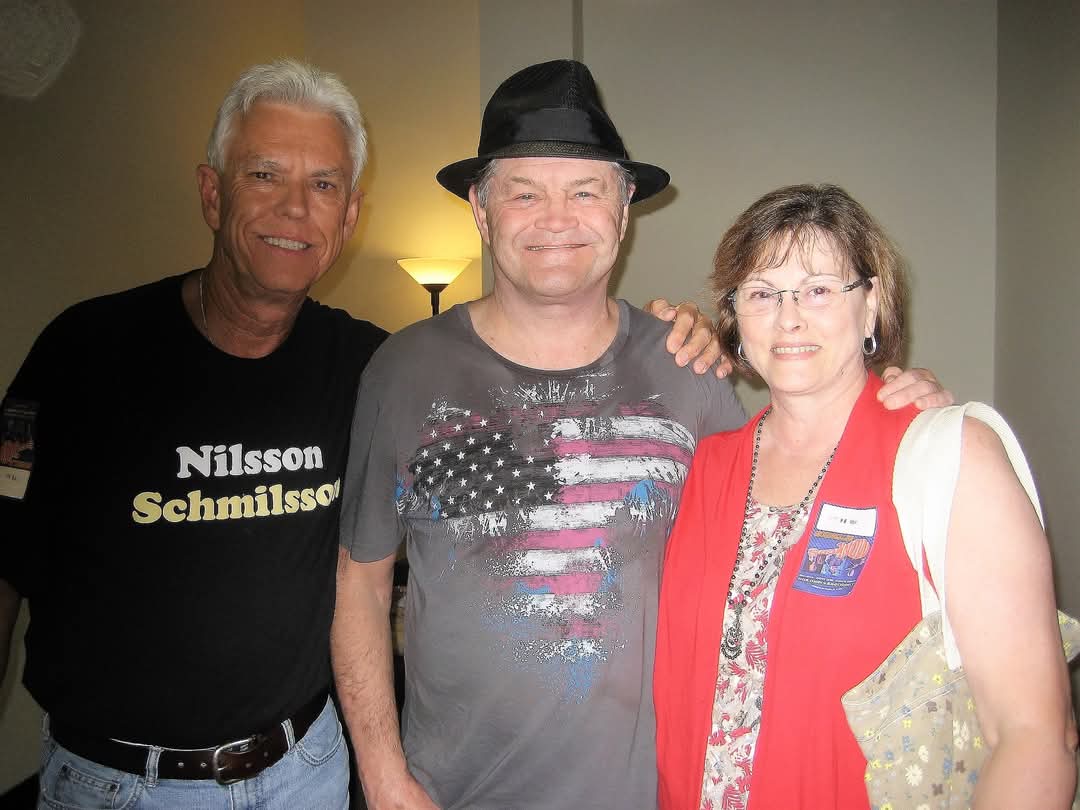
Gary Nilsson Dies

It is with great sadness that we have learned of the passing of Gary Nilsson.


Gary was a supporter of this website, providing photographs, news articles, and personal anecdotes about his half-brother, Harry Nilsson. Gary was a fan of popular music and Harry's music in particular. His Facebook page is full of photos of him with pop stars from the 1960s and '70s. As a featured guest at Harryfest 2002 he shared stories of growing up as both a fan and relative of Harry Nilsson and about his, and Harry's, father who shared Harry's love of baseball and was once a scout for the Cincinnati Reds.


But, beyond all of that, Gary was a friend. He will be missed.

Harry Nilsson News (2025-02-20)

Newly-Released Film of Harry Nilsson and Ringo Starr at the Son Of Dracula Premiere

A newly-released film shows Harry Nilsson and Ringo Starr attending the premiere of Son of Dracula.


Harry Nilsson and Ringo Starr at the Son Of Dracula Premiere

Harry Nilsson News (2024-12-24)

Richard Perry Has Died

Richard Perry, producer of Harry Nilsson's Nilsson Schmilsson has died. Perry died at age 82 on December 24, 2024.


More Harry Nilsson News ...


Featured Article of the Day


The Presence of Christmas

This article originally appeared in Everybody's Talkin' #16, March 2001.


By Doug Hoefer


Doug Hoefer, Harry Nilsson’s cousin, confidant, side-man, and friend produced The Presence of Christmas. This seasonal favorite proved to be the last Harry Nilsson album released before the singer’s death. In this article, Doug tells the story of the album’s evolution in his own words.


Those of you who have heard Presence of Christmas don’t need to be told what a wonderful reader/narrator Bruce Heighley is!


I first met Bruce in the summer of ’84. I was in the middle of my brief tenure at Evergreen Studios and we met at the infamous Blarney Stone Restaurant a few blocks away. I had been there a year or so earlier with Harry during the Harry Does Yoko sessions.


Bruce, I discovered, was a classically trained actor from England who had among his extensive list of credits, a long run in the Broadway hit "Borstal Boy." He knew I was working at the Studio and asked me if I would be interested in working with him on some ideas he had. The first thing he wanted to do was a recording of the Rudyard Kipling poem, "If," but he wanted to add some sort of musical background. As it happened, I had written a solo piano piece a few years back after reading the Montomery Clift biography, "Monty." I was vaguely familiar with the poem, and I knew my piano piece was at least five minutes long, so we agreed to give it a try.


We booked a few hours of down time at Evergreen (cheaper for employees!) and as you might surmise, Bruce laid it down dead on in three takes. That done, we went back a few nights later and I played the piano and synthesizer to the narration. All in all, it was done in a few hours and although very few people have ever heard it, it is something that we were and are very proud of. More importantly, it inspired us onward.


Next we decided to do the well-known public domain piece, "One Solitary Life." Because of the inherent solemnity of the prose, we felt as a musical background "God Rest Ye Merry Gentlemen" would do nicely. We timed the text for length, recorded the music first and Bruce read to the track. We used those recordings as a production demo for our newly formed company, Elegant Greetings. In 1984, the audio book industry was in its infancy and very few companies, if any, were producing this type of material.


It was around this time that Harry, on a flight from New York to Los Angeles, met Citicorp executive Jim Hock who was considering making a career change into the entertainment industry. Over the course of the next year they began forming the Hawkeye Corporation. In May of ’85, I went back to New York with Harry (where he was living at the time) for a visit and to see family on Long Island as well. Jim Hock was also living on Long Island - in fact all three of us, at one time or another, lived in Bayport.


I had previously discussed our plans for Elegant Greetings and when I stopped by to see him, I played our demo of "If" and "One Solitary Life." Obviously impressed, he asked if we could make an entire album. That fall, back in Los Angeles, Bruce and I began amassing anthologies of short stories, prose, and poetry for consideration for the proposed album. It was on one of our many library excursions that we came across the wonderful Norman Rockwell’s Christmas Book. That’s it! Why not a Christmas album of stories, poetry, and music?!


When I was growing up, every Christmas Eve I would drag out our old recording of Lionel Barrymore’s version of "A Christmas Carol," lie on the floor next to the Christmas tree and be magically transported to the England of Dickens, entranced by the performance of the great Barrymore. I honestly cannot think of another Christmas album that comes close to that experience. And it was exactly that experience that I hoped to recreate.


Bruce and I felt with the right material and a little inspiration we could create something unique and memorable. After reading through the Rockwell book, we knew we had to include James Hilton's "Twilight of the Wise," Taylor Caldwell's “My Christmas Miracle” and Booth Tarkington's "Christmas This Year." We wanted to make sure that the album was also a family and spiritual experience, so we added the Bible stories and the children’s poems.


With "One Solitary Life" already done, we added "Song From Heaven" by Bertha Pauli and "The Miraculous Staircase" by Arthur Gordon. Unfortunately, no matter how positively we thought about it, the Norman Vincent Peale estate which owned the copyright, would not give us permission to use "Staircase."


Just as in the film world, the musical underscore of a spoken word recording adds emotion, momentum and color, and with "mind movies" (as we like to call them) the treatment is as dramatic and important as in film. The major difference is in the element of restraint. Because of the unique imagery each and every one of us creates while listening to a story - as opposed to watching a film - this lends itself to a rather minimalist approach to scoring, so the old axiom "less is more" applies here. Thankfully, in this situation the stories themselves suggested the appropriate music. For instance in "Twilight of the Wise," what else could one think of but "It Came Upon A Midnight Clear" as, in the dead of night, the soldiers descended upon the valley vista which was ultimately their salvation? Likewise, when the church bells begin to peal in "My Christmas Miracle," Taylor Caldwell obviously heard "O Come All Ye Faithful" as she wrote the words "The Lord is born, sang the bells to the crystal night and the laughing darkness."


And so, on it went. But knowing what music we wanted was one thing. The next problem was who and how. 


The bar at the Bel Air Hotel, off the beaten track of Sunset Blvd, is legendary in its own right. Howard Hughes sold TWA there; Montgomery Clift and Marilyn Monroe whispered in the corner over cocktails and a young Grace Kelly swam (skinny-dipped?!) in the pool at midnight. In later years, it was the scene of innumerable evenings best left to discretion and imagination as Harry Nilsson’s local hang-out and I enjoyed the singular pleasure of many an evening there.


The house pianist at the Bel Air was tall, handsome Alphonse Renaudo. Belying the tuxedo-clad, champagne-drinking demeanor of the typical cocktail pianist, I remember, Alphonse was as comfortable with Chopin’s music as he was with the obligatory show tunes and standards. With all the narration for Presence of Christmas completed, I asked Alphonse if he would consider playing the various musical backgrounds that we had designed for the album. We got together and played him some of the narration and gave him copies of the text. Intrigued by the novelty of the project, he agreed to lend his talents to the album. In the ensuing sessions, he brought to fruition all and more than we’d hoped for.


For each session we gave him a printed copy of each story or narration with indications of what music we wanted and where we wanted it to begin and end. It was only necessary, then, to replay a few paragraphs of the narration before each musical cue and punch in his track on time. I can only describe his performance as effortless inspiration. But, while the piano parts were done, we still needed to over-dub the orchestration. For these following sessions, Alphonse over-dubbed in one pass at a time the string arrangements for each music cue. Performed on the synthclavier, this was done by splitting the keyboard into bass, cello, viola and violin parts. Despite the difficulty of playing each string part simultaneously, he managed to bring a wonderful subtlety to each piece.


Back at Greyhound Studios, where we had done the original narrations, we spent about a week or so mixing the musical cues behind the vocal tracks. We delivered the completed two-track version of the master of The Presence of Christmas to Hawkeye on time, as promised.


That’s when things got really interesting.


Welcome to the Harry Nilsson Web Pages

This site is dedicated to the music and memory of Harry Nilsson. From the late 1960s through the early '90s, Nilsson produced music that both challenged norms and celebrated the past - often within the same song.
On first listen, his early Pandemonium Shadow Show is just an appealing collection of bouncy pop songs, a product of the time when it was released. But, on closer listen songs like "1941" and "Without Her" feature poignant and wistful lyrics on top of their upbeat, pop melodies. To the listener in the late 1960s, the melodies and songs, such as “Freckles” sometimes invoked what would have seemed a nostalgic air, but they still sound fresh more than fifty years later.
Nilsson remained unconventional throughout his career. He never toured to support an album and he made few TV appearances. He released an album of songs which were all written by another songwriter. He recorded an album of standards in front of an orchestra. He followed up his best selling album and song with an album featuring a song pretty much guaranteed to surprise, if not offend, his new fans.
Harry ventured into movies and TV, creating a classic animated story (“The Point!”) and writing the music and songs for the once-panned, but now cult favorite, film Popeye starring Robin Williams.
In the last years of his life, after his friend John Lennon was shot and killed, Harry stepped back from music and, ironically perhaps, more into the public eye as the spokesperson for the Coalition to Stop Gun Violence advocating for sensible gun laws in America.
A heart attack took Harry’s life in early 1994. Yet, his memory lives on in the hearts and minds of his friends, family, and fans. And his music lives on with Sony releasing a comprehensive collection of his works on CD and his music being featured prominently in TV and movies.
Shopping Links: