Banjo
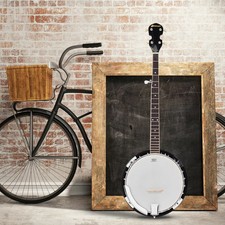
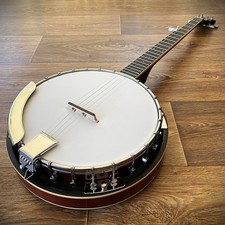
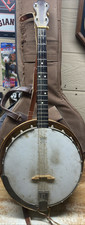
The banjo is a stringed musical instrument with a thin membrane stretched over a frame or cavity to form a resonator. The membrane is typically circular, and in modern forms is usually made of mylar (BOPET), whereas earlier examples of banjos had membranes made of goat skin. Early forms of the instrument were fashioned by the "African diaspora" and had African antecedents. In the 19th century, interest in the instrument was piqued across the United Kingdom and United States by traveling members of highly popular traveling blackface minstrel shows, followed by mass production and mail-order sales, including instructional books. The inexpensive or home-made banjo remained part of rural folk culture, but five-string and four-string banjos also became popular for home parlour music entertainment, college music clubs, and early 20th century jazz bands. By the early 20th century, the banjo was most frequently associated with the folk, blues, cowboy, and country music genres. By mid-century, the banjo had come to be strongly associated with bluegrass. Eventually it began to be employed occasionally and sporadically in other kinds of popular music. Some famous American bluegrass players of the banjo are Ralph Stanley and Earl Scruggs. Historically, the banjo occupied a central place in black American traditional music and rural folk culture before entering the mainstream via the minstrel shows of the 19th century. Along with the fiddle, the banjo is a mainstay instrument of American styles of music, such as bluegrass and old-time music. The banjo is also very frequently used in Dixieland jazz, as well as in Caribbean genres like biguine, calypso, mento and twoubadou.
This article uses material from the Wikipedia article "Banjo", which is released under the Creative Commons Attribution-Share-Alike License 3.0.
Connection Chains
- From George Tipton to Banjo in 17 Steps
- From The Flying Saucer Song to Banjo in 15 Steps
- From Unichappell Music to Banjo in 15 Steps
- From Richard Perry to Banjo in 14 Steps
- From Nilsson Sings Newman to Banjo in 12 Steps
- From Intersong Music to Banjo in 12 Steps
- From I'll Never Leave You to Banjo in 11 Steps
- From Six Continents Music to Banjo in 11 Steps
- From Bobby Keys to Banjo in 11 Steps
- From Bongo Rock '73 to Banjo in 11 Steps
- From Randy Newman to Banjo in 11 Steps
- From The Kojacks to Banjo in 11 Steps
- From Nobody Cares about the Railroads Anymore to Banjo in 11 Steps
- From Yo Dodger Blue, LA Loves You to Banjo in 10 Steps
- From Lovedrug to Banjo in 10 Steps
- From Jane Getz to Banjo in 10 Steps
- From Back Off Boogaloo to Banjo in 10 Steps
- From As I Wander Lonely to Banjo in 10 Steps
- From John Bonham to Banjo in 10 Steps
- From Astrud Gilberto to Banjo in 9 Steps
- From Kat Hendrikse to Banjo in 9 Steps
- From Nilsson House to Banjo in 9 Steps
- From The Young and the Restless to Banjo in 9 Steps
- From Buy My Album to Banjo in 9 Steps
- From Los Angeles, California to Banjo in 9 Steps
- From Sister Marie to Banjo in 9 Steps
Connections
- George Segal plays Banjo