Umm Kulthum
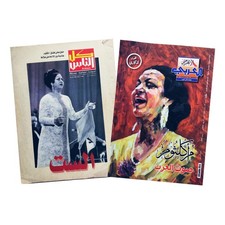
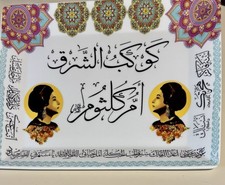
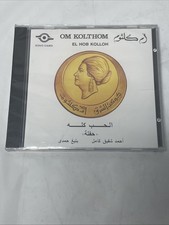
Fatima Ibrahim es-Sayyid el-Beltagi (4 May 1904 – 3 February 1975), known by her stage name Umm Kulthum, was an Egyptian singer and film actress. She was given the honorific title Kawkab el-Sharq (Egyptian Arabic: كوكب الشرق, lit. 'Planet of the East'). Immensely popular throughout the Middle East and beyond, Umm Kulthum is a national icon in her native Egypt; she has been dubbed "The Voice of Egypt" and "Egypt's Fourth Pyramid". In 2023, Rolling Stone ranked Umm Kulthum at number 61 on its list of the 200 Greatest Singers of All Time. She is widely regarded as Egypt and the Arab world's most distinguished singer of the 20th century. Her funeral in Cairo in 1975 drew a crowd of over 4 million people, the largest human gathering in Egypt's history, and one of the largest funerals in history. Born in the village of Tamay al-Zahayra in the Dakahlia Governorate of Egypt, she began her music career as a child, singing religious hymns with her father, who initially dressed her in boys' clothes, as singing was unacceptable for girls in the countryside at that time. She moved to the city of Cairo in the early 1920s, where her career truly took off. She collaborated with renowned poets such as Ahmed Rami and composers such as Mohamed El Qasabgi, Zakaria Ahmed, Riad El Sunbati, and later Baligh Hamdi and Mohammed Abdel Wahab. Distinguished by her powerful contralto voice and exceptional performance and expressive abilities, she reigned supreme in the world of both Egyptian in the Egyptian Arabic and Arabic song for decades. She was famous for performing long, musically and lyrically complex songs, as well as singing religious hymns and classical Arabic poems. Active from the 1920s to the 1970s, Umm Kulthum performed hundreds of songs that remain widely popular today, including Ya Laylat al-Eid, Wallāh Zamān, Yā Silāḥī, Inta Omri, Al Atlal, Alf Laila wa Laila, Seret El Hob, and Rubaiyat Omar Khayyam. In film, Umm Kulthum starred in six films, including Weddad (1936) and Sallama (1945). Umm Kulthum's music and public persona were seen as authentically Egyptian, deeply rooted in the country's rural, working-class origins and classical Egyptian traditions. She used her immense fame to promote Egyptian identity. She played a prominent national role, particularly after the 1967 war, performing concerts in various Arab and European countries to raise funds for the Egyptian war effort under the slogan "Art for the War Effort." She continued this practice until shortly before the 1973 war. Although she was unable to sing the victory song at the 1973 war victory celebrations due to her health problems, she visited the war wounded, attended the victory celebrations, and received a letter of gratitude from President Anwar Sadat for her efforts on behalf of the nation. She remains the most influential singer in the history of modern Egypt. In 2025, her enduring legacy was marked by extensive international commemorations for the 50th anniversary of her death. The Umm Kulthum Museum is located in Cairo, where visitors can view her personal belongings and learn about her artistic history. Her works continue to be broadcast and studied, and she remains an influential cultural icon to this day.
This article uses material from the Wikipedia article "Umm Kulthum", which is released under the Creative Commons Attribution-Share-Alike License 3.0.
References
| Title | Summary | |
|---|---|---|
| Desert Island Discs {Dame Zaha Hadid} | ... , Drake , Sam Smith , and Umm Kulthum . Unf ... | |