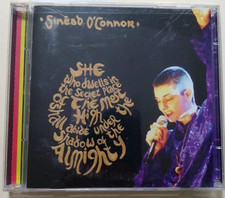
O'Connor recorded Harry Nilsson's "I Guess the Lord Must Be in New York City" for the soundtrack of the film You've Got Mail. Originally, the song was intended to be used in the film, but at the last minute it was replaced by Nilsson's original version. O'Connor's version still appears on the soundtrack CD.
"I Guess the Lord Must Be in New York City" by Sinead O'Connor
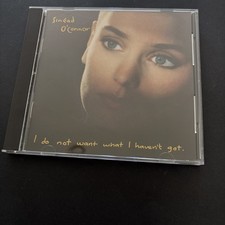
Sinéad Marie Bernadette O'Connor ( shin-AYD; 8 December 1966 – 26 July 2023), also known as Shuhada' Sadaqat, was an Irish singer, songwriter, and activist. During her musical career, which encompassed several hit records and artist collaborations, O'Connor drew attention to issues such as child abuse, human rights, racism, and women's rights. She was also known for her outspoken public image, openly discussing her spiritual journey, activism, socio-political viewpoints, and struggles with mental health. O'Connor's debut studio album, The Lion and the Cobra, was released in 1987 and achieved international chart success. Her 1990 album, I Do Not Want What I Haven't Got, was her biggest commercial success, selling over seven million copies worldwide. Its lead single, "Nothing Compares 2 U", became her signature song and was named the top world single of the year at the Billboard Music Awards. During a performance on Saturday Night Live in 1992, O'Connor tore up a photograph of Pope John Paul II which sparked global controversy, nearly a decade before the Catholic Church sexual abuse cases became widely publicized. O'Connor's next albums Am I Not Your Girl? (1992) and Universal Mother (1994) were both certified gold in the UK, while Faith and Courage (2000) was certified gold in Australia and Throw Down Your Arms (2005) was certified gold in Ireland. Having converted to Islam in 2018, she adopted the name Shuhada' Sadaqat while continuing to perform and record under her birth name. Her memoir, Rememberings, was released in 2021 and became a bestseller. In 2024, O'Connor was posthumously nominated for induction into the Rock And Roll Hall of Fame.
This article uses material from the Wikipedia article "Sinéad O'Connor", which is released under the Creative Commons Attribution-Share-Alike License 3.0.
![Sinead O'Connor - The Lion And The Cobra [New Vinyl LP] Reissue](https://i.ebayimg.com/images/g/cxcAAeSwo3FpHhJt/s-l225.jpg "Sinead O'Connor - The Lion And The Cobra [New Vinyl LP] Reissue")

![Sinead O'Connor - I Do Not Want What I Haven't Got [New Vinyl LP]](https://i.ebayimg.com/images/g/NagAAeSwC-Voy-Ve/s-l225.jpg "Sinead O'Connor - I Do Not Want What I Haven't Got [New Vinyl LP]")